
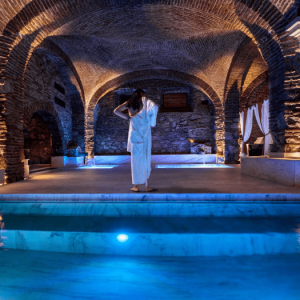


Portugal is a country deeply marked by the Roman presence. Roads, bridges, ruins, mosaics, thermal baths and archaeological remains remind us that Roman culture left lasting imprints on the territory. Among these legacies, baths hold a special place.
The Roman heritage in Portugal
Roads, bridges, ruins, mosaics, bathhouses and archaeological remains remind us that Roman culture left lasting marks on the territory. Among these legacies, the baths hold a special place.
Water as a ritual in the Roman tradition
In the Roman tradition, water was more than just functional. It was an element of healing, socialising, hygiene, pleasure and ritual. The thermal spas were places of meeting, of rest and of body care. This view of water as full experience continues to inspire spas and wellness spaces in Portugal today.
How Roman baths are reinterpreted today
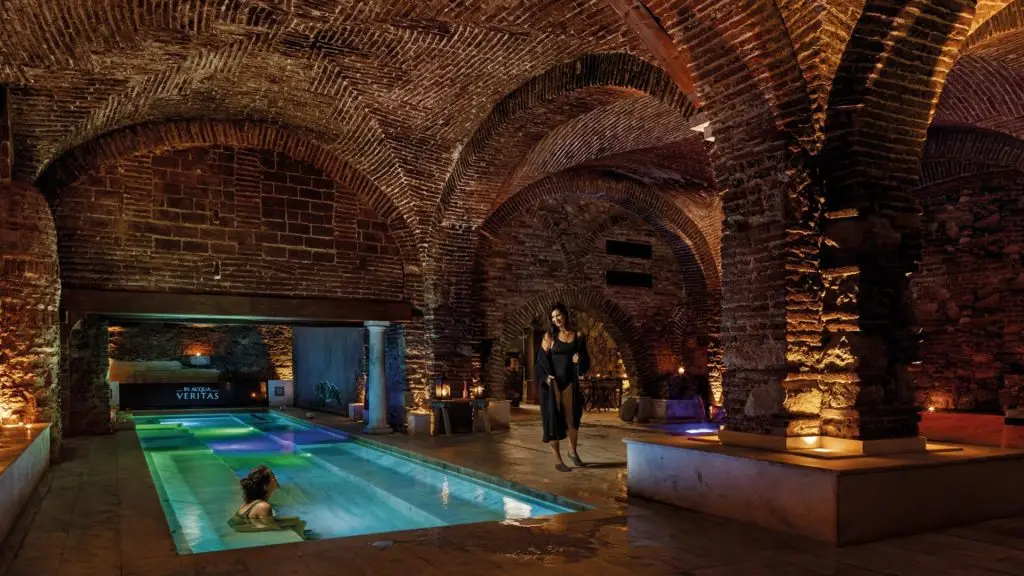
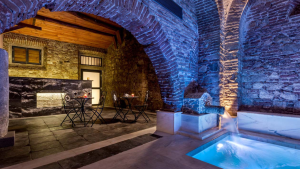
Roman baths in a contemporary context do not just seek to reproduce the past. They seek to reinterpret it. Through architecture, lighting, materials, temperature, and atmosphere, they create a link between history and modern comfort. The result is a relaxation experience with cultural depth.
Deep cultural relaxation
In a country where heritage carries such weight, a spa inspired by Roman baths offers more than an experience. It offers a narrative. The sensation of entering a space where water carries memory, where silence invites pause, and where the body finds rest in an ancient manner.
Authentic experiences to feel the place
This link between well-being and history is especially relevant for those seeking authentic experiences. Many visitors are no longer just looking for accommodation, meals, or monuments. They are looking for moments that allow them to feel the place. A Roman bath can be precisely that: a sensory way to experience history.
Cultural tourism and well-being in Portugal
In Portugal, where cultural tourism and wellness tourism are increasingly intersecting, Roman baths have enormous potential. They are a differentiating, elegant and timeless experience. They unite the pleasure of water with the memory of the territory.
An ancient ritual adapted for the present
Therefore, relaxing in a Roman bath is more than just resting. It’s stepping into an ancient ritual, adapted for the present day, where time seems to slow down.
At Acqua Veritas Spa in Évora
Experience inspired by ancient Roman baths
Discover a wellness ritual where water, heat, silence, and time come together for a memorable experience.
Frequently asked questions about Roman baths in Portugal
Roman baths are ancient thermal water sites in Portugal that were used by the Romans for bathing and socialising.
Roman baths in Portugal are experiences inspired by the Roman tradition of water, heat and well-being, reinterpreted today in spa and relaxation spaces.
The Roman baths were a fundamental part of everyday life in the Roman Empire, serving not only as places for hygiene but also as social and cultural centres. These establishments, often grand and elaborate, featured a sequence of rooms with varying temperatures, including the *frigidarium* (cold room), *tepidarium* (warm room), and *caldarium* (hot room). They also included exercise areas, libraries, and even shops. Portugal, known then as Lusitania, was an integral part of the Roman Empire for several centuries. The Romans established cities, infrastructure, and brought their culture and way of life to the region. Naturally, this included the practice of Roman bathing. Evidence of Roman baths has been found in numerous archaeological sites across Portugal, indicating their presence and importance in Roman Lusitania: * **Conímbriga:** This is one of the best-preserved Roman urban sites in Portugal. The remains of large public baths and private bathing facilities are clearly visible. These were extensive complexes demonstrating the wealth and sophistication of the city. * **Baleal Rock (Peniche):** While perhaps not as grand as those in larger cities, evidence suggests Roman presence and potentially bathing facilities in coastal areas. * **Other Roman Cities:** Many Roman settlements in Portugal, such as Miróbriga, would have had public baths as a standard amenity. The presence of remnants of *hypocausts* (underfloor heating systems) is often a key indicator of the location of Roman bathhouses. The construction and use of these baths reflect the Romanisation of Portugal. They represent the adoption of Roman customs, architecture, and engineering techniques. The communal aspect of Roman baths also played a role in social integration, where people from different social strata could come together. Therefore, the link between Portugal and Roman baths is a direct one: Roman baths were established and actively used in the territory of modern-day Portugal during the Roman period as an integral part of Roman urban and social life. They are a significant archaeological testament to the Roman presence and influence in the region.
Portugal retains several traces of Roman presence, including ruins, thermal baths, mosaics, and archaeological remains. This heritage helps to contextualise the importance of water and wellness rituals in Roman culture.
Do modern Roman baths reproduce the ancient ones exactly?
No. Roman baths in a contemporary context reinterpret the past through architecture, lighting, materials, temperature, and atmosphere, adapting Roman inspiration to current comfort.
Roman baths are associated with relaxation for several reasons, originating from their multifaceted function in Roman society. Firstly, the mere act of bathing was a crucial aspect of Roman hygiene and social life. Going to the baths was not just about getting clean but also about unwinding, socialising, and taking a break from daily life. Secondly, the elaborate designs of Roman bathhouses themselves contributed to the sense of calm and luxury. These complexes often featured beautiful architecture, gardens, and art, creating an aesthetically pleasing and tranquil environment. Thirdly, Roman baths incorporated a sophisticated system of heating and water. They had different rooms with varying temperatures – the *frigidarium* (cold room), *tepidarium* (warm room), and *caldarium* (hot room). This progression through different temperatures was thought to be beneficial for health and provided a full-body experience that could soothe muscles and promote relaxation. Steam rooms were also common, further enhancing the therapeutic and relaxing effects. Fourthly, many bathhouses offered additional services that enhanced the experience of relaxation. These could include massage, oiling of the body, and even access to libraries or gymnasiums. These amenities provided a holistic approach to well-being, combining physical cleansing with mental and bodily rejuvenation. Finally, the social aspect of Roman baths cannot be overlooked. They were central hubs for social interaction, where people from different social strata could meet, converse, and engage in leisurely activities. This socialisation, away from the stresses of work and public life, would have been inherently relaxing for many. In summary, Roman baths are associated with relaxation due to their combination of hygiene, luxurious environments, therapeutic water systems, additional pampering services, and social functions. They were designed as spaces for both physical and mental rejuvenation.
Because they combine water, temperature, silence and pause time. These elements create a sensory experience that helps the body to slow down and regain a sense of balance.
Onde viver uma experiência inspirada nos banhos romanos em Portugal?
At Acqua Veritas Spa in Évora, you can experience well-being inspired by ancient Roman baths, in an exclusive environment dedicated to relaxation.
 Portuguese
  English
  Spanish
  French