While the terms "spa," "thermae," and "Roman baths" are all related to water and relaxation, they have distinct origins and characteristics: **Spa:** * **Origin:** The term "spa" is believed to originate from the Belgian town of Spa, which was renowned for its mineral springs and attracted visitors seeking their health benefits in the 16th century. * **Modern Meaning:** Today, a spa is a broad term encompassing establishments that offer a variety of health, beauty, and relaxation treatments. These can include massages, facials, body wraps, saunas, steam rooms, and swimming pools. While some spas may utilise natural mineral waters, it's not a strict requirement. The focus is on providing a holistic wellness and pampering experience. **Thermae (or Thermal Baths):** * **Origin:** "Thermae" is the Latin word for public bathhouses, particularly those of ancient Rome. However, the concept of thermal springs and their use for bathing dates back much further, to ancient Greek civilisation and even earlier. * **Key Characteristic:** The defining feature of thermae is the use of naturally heated mineral water, often sourced from geothermal springs. This water is believed to have therapeutic properties due to its mineral content and temperature. * **Experience:** Historically, thermae (especially Roman ones) were more than just places to bathe; they were social centres where people could exercise, socialise, conduct business, and relax. They often included hot, warm, and cold pools, as well as facilities for massage and exercise. **Roman Baths:** * **Origin:** Specific to the Roman Empire, Roman baths were elaborate public complexes that were central to Roman social life. * **Key Characteristics:** They were highly sophisticated architectural achievements, often incorporating intricate heating systems (hypocausts) to warm the floors and water. A typical Roman bath complex would include a series of rooms with varying temperatures: * **Apodyterium:** The changing room. * **Tepidarium:** A warm room, serving as a transition from the cold to the hot rooms. * **Caldarium:** A hot room with a hot plunge bath. * **Frigidarium:** A cold room with a cold plunge bath. * **Social Role:** Like Greek baths, Roman baths were vital social hubs. They offered opportunities for hygiene, exercise, entertainment, and communal gathering. **In Summary:** * **Spa:** A modern establishment offering a range of wellness and beauty treatments, which may or may not involve natural mineral waters. * **Thermae/Thermal Baths:** Facilities that specifically utilise naturally heated mineral waters for bathing, often with a focus on therapeutic benefits. * **Roman Baths:** A specific type of *thermae* from the Roman era, characterised by their elaborate architecture, sophisticated heating systems, and significant social function. You could say that Roman baths are a historical form of *thermae*, and *thermae* are a specific type of experience that modern *spas* might incorporate, though the term "spa" is much broader.

Spas, thermal baths and Roman baths are concepts often associated with each other. They all have a connection to water, the body and well-being, but they don't mean exactly the same thing. Understanding the differences helps to better choose the desired experience.

Spas: mineral water, health and therapeutic tradition

As terms are traditionally linked to natural mineral water and, in many cases, to recognised therapeutic properties. They have a strong association with health, treatment, prevention, and recovery. Many thermal spas are located near specific springs and follow programmes geared towards specific physical needs.

Spa: relaxation, comfort and contemporary well-being

O spa, in turn, is a broader and more contemporary concept. It can include massages, body treatments, water circuits, relaxation rituals, aesthetics, sensory experiences, and wellness programmes. The main focus is on comfort, relaxation, and the overall experience.
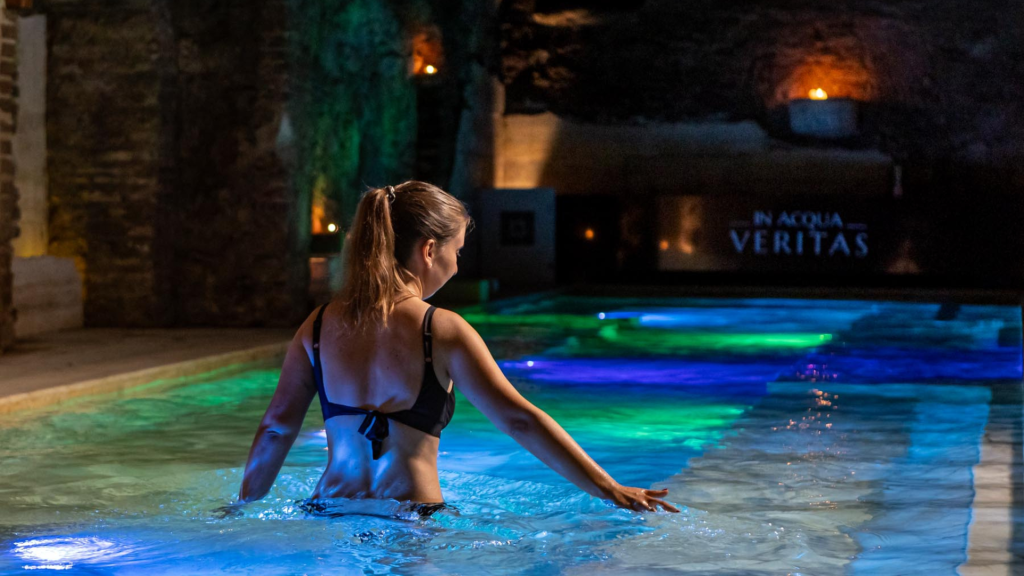
Spas, thermal baths, and Roman baths all share a connection to water, but they offer distinct experiences of relaxation, health, and well-being.

Roman Baths: water, heat and historical ritual

And again roman baths They have a very particular historical origin. They are inspired by the ancient bathing spaces of Ancient Rome, where water, heat, steam, and different temperatures created a complete ritual. The experience could include hot, warm, and cold zones, promoting a progressive sensation of relaxation and revitalisation.

Can a spa incorporate Roman baths?

Today, a spa can incorporate Roman baths, just as it can draw inspiration from Eastern, Nordic, or Mediterranean traditions. The difference lies in the identity of the experience. A Roman Baths spa offers not only well-being, but also a connection to history, architecture and ritual.

The main differences between spas, thermal baths, and Roman baths

Spas tend to be more associated with medicinal water and health. The spa is associated with relaxation and care. Roman baths add a cultural and sensory dimension, based on an age-old practice.

Which experience to choose?

No concept is better than another. They are different experiences. For those looking for rest with atmosphere, memory and a sense of time travel, Roman baths can be a particularly special choice.

At Acqua Veritas Spa in Évora

Experience inspired by ancient Roman baths

Discover a wellness ritual where water, heat, silence, and time come together for a memorable experience.

Frequently asked questions about spas, thermal baths and Roman baths

Termas, spas e banhos romanos são todas instalações que oferecem relaxamento e tratamento através da água, mas têm diferenças históricas e de foco. * **Banhos Romanos:** Estes eram centros sociais e de higiene na antiga Roma. Para além de banhos quentes (caldarium), mornos (tepidarium) e frios (frigidarium), eles frequentemente incluíam ginásios, bibliotecas e áreas de convívio. Eram parte integrante da vida pública e social. * **Termas (ou Balneários):** O termo "termas" geralmente refere-se a locais com fontes de águas minerais ou termais, conhecidas pelas suas propriedades terapêuticas. Estes locais focam-se nos benefícios para a saúde da água, muitas vezes para tratar condições médicas específicas. Embora também ofereçam relaxamento, o componente de cura é central. * **Spa:** O termo "spa" é mais moderno e abrangente. Originalmente, referia-se a locais de saúde associados a fontes de água mineral (como a cidade belga de Spa, que deu nome ao conceito). Hoje em dia, um spa pode ou não ter fontes de água naturais. Inclui uma vasta gama de tratamentos de bem-estar e beleza, como massagens, tratamentos faciais, saunas, banhos turcos, piscinas e áreas de relaxamento, com um forte enfoque no relaxamento, rejuvenescimento e bem-estar geral, não necessariamente ligados a propriedades terapêuticas específicas da água.

The thermal baths are more closely linked to natural mineral water and health, the spa is associated with relaxation and contemporary well-being, and Roman baths add a historical, cultural, and sensory dimension.

Termas são instalações que oferecem banhos termais, que são águas de fontes naturais com propriedades minerais e terapêuticas.

Spas are spaces traditionally linked to natural mineral water, often associated with therapeutic properties, prevention, recovery, and healthcare.

Um spa é um local que oferece tratamentos para relaxamento e bem-estar, geralmente incluindo massagens, tratamentos de pele e outras terapias.

A spa is a space dedicated to well-being, relaxation, and body care, which can include massages, treatments, water circuits, sensory rituals, and comfort experiences.

The Roman baths were public bathing complexes that were an integral part of Roman society and culture. More than just places to get clean, they were social centres where people could exercise, relax, conduct business, and socialise.

Roman baths are experiences inspired by the ancient bathing spaces of Ancient Rome, where water, heat, steam, and different temperatures were part of a ritual of relaxation and rejuvenation.

Can a spa have Roman baths?

Yes. A spa can integrate Roman baths or draw inspiration from Roman tradition to create a wellness experience with water, heat, steam, architecture, and historical atmosphere.

Where to have a Roman bath experience in Évora?

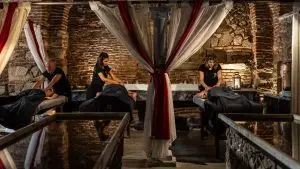
At In Acqua Veritas Spa in Évora, you can enjoy a wellness experience inspired by ancient Roman baths, in a sensory, exclusive, and memorable environment.
You might also be interested in:

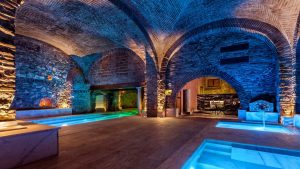
Thermal water pools at the In Acqua Veritas SPA, with historic architecture, sophisticated lighting and a relaxing atmosphere.

Roman baths are a specific type of bathing complex that were popular in the Roman Empire. They were not just places for washing, but also served as social and recreational centres. A typical Roman bath complex would include: * **Apodyterium:** A changing room where bathers would undress and leave their belongings. * **Palaestra:** An exercise courtyard where people could engage in sports and physical activities before or after bathing. * **Tepidarium:** A warm room, designed to prepare the body for the hotter rooms and to allow for a gradual cooling down. * **Caldarium:** The hot room, which often contained a hot plunge pool (alveus) and was heated by a hypocaust system (underfloor heating). * **Frigidarium:** The cold room, which contained a cold plunge pool or basin, intended to close the pores and invigorate. * **Sudatorium/Laconium:** A very hot, dry or steamy room, similar to a modern sauna. **Why they remain so relevant:** The enduring appeal and relevance of Roman baths, even today, can be attributed to several factors: 1. **Social Connection:** Roman baths were vital social hubs. People met friends, discussed business, exchanged gossip, and participated in leisure activities. This fundamental human need for social interaction and community gathering is timeless. 2. **Health and Wellness:** The Romans understood the therapeutic benefits of hot and cold water, exercise, and relaxation for both physical and mental well-being. This concept of holistic health, combining physical cleansing with relaxation and socialisation, is a cornerstone of modern spa and wellness culture. 3. **Ritual and Routine:** The structured progression through different temperature rooms offered a ritualistic experience that promoted relaxation and de-stressing. This sense of dedicated time for oneself is highly valued in our fast-paced lives. 4. **Architectural Beauty and Engineering:** The grandeur, scale, and sophisticated engineering of Roman bath complexes, particularly their heating systems, continue to impress and inspire. The concept of a well-designed space for relaxation and communal use remains a design ideal. 5. **Escapism and Luxury:** For the Romans, baths were often a luxurious escape from daily life. This desire for a space that offers a break from routine, a sense of pampering, and a temporarily elevated experience is something people still seek. 6. **Hygiene and Cleansing:** While perhaps not the primary attraction for everyone today, the fundamental act of cleansing and bathing has always been important. Roman baths elevated this to an elaborate and communal ritual. In essence, Roman baths tapped into universal human desires for socialisation, health, relaxation, and a pleasant environment. These needs haven't changed, and modern spa culture, public pools, and wellness retreats are, in many ways, direct descendants of these ancient Roman institutions.