
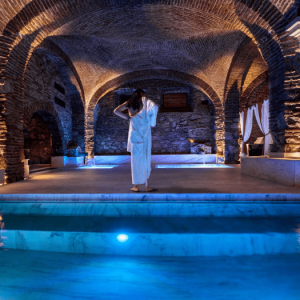


The ancient Roman baths were carefully designed spaces to lead the body through different thermal sensations. The experience did not happen by chance. Each room had a specific function and was part of a progressive journey of preparation, relaxation, and revitalisation.
What was the caldarium?
O caldarium This was the hottest area of the baths. Here, the heat and steam enveloped the body, helping to relax the muscles and create a deep sense of comfort. It was the space of surrender, where the body began to release tension and slow down.
The role of the tepidarium in the Roman ritual
Then came the Tepidarium, a room of warm, intermediate temperature. This was one of the ritual's most important spaces, because it allowed the body to adapt gradually. Neither too hot nor cold, the tepidarium acted as a balancing zone. It was a place of transition, where the body rested and the mind began to quieten.
The frigidarium was used for cooling down.
Finally, the frigidarium it offered the contrast of cold water. This step had a revitalising function. After the heat, the cold awakened the body, stimulated a sensation of energy and concluded the thermal cycle with a note of freshness.
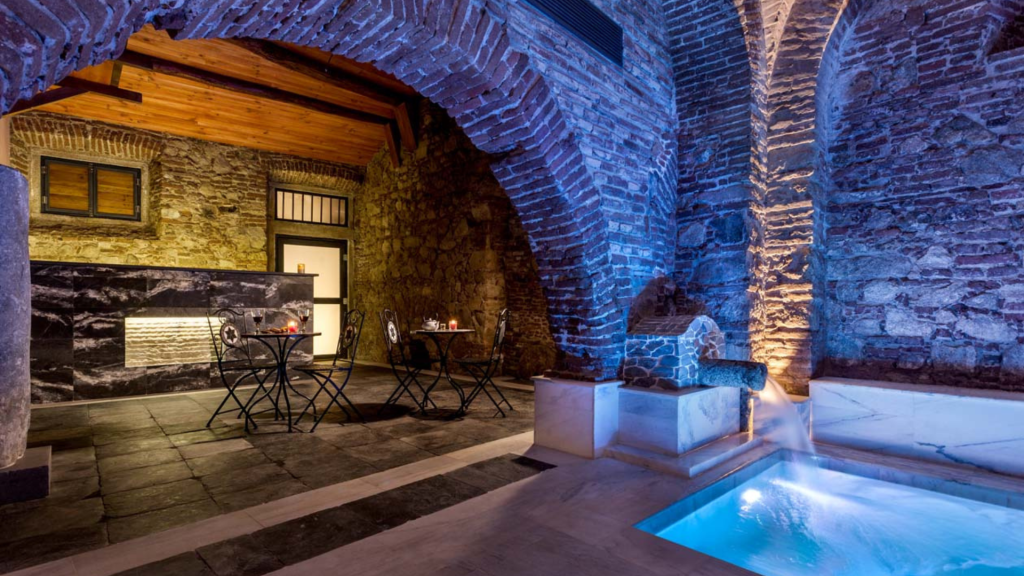
The thermal sequence of Roman baths
The sequence of hot, warm, and cold was an intelligent way of working the body through water. Today, many spas reinterpret this principle, creating wellness circuits inspired by ancient rituals but adapted for contemporary comfort.
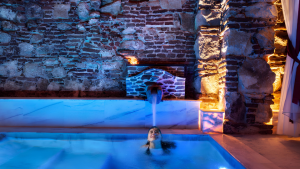
Meet the In Acqua Veritas Spa experiences in Évora inspired by the ritual of ancient Roman baths.
Caldarium, tepidarium and frigidarium: three moments of the same journey
More than just Latin names, caldarium, tepidarium and frigidarium represent three moments of the same journey: to warm, to balance and to revitalise. It is this sensory logic that continues to make Roman baths so special.
Roman inspiration in the contemporary spa
Entering a Roman-inspired spa is, in a way, revisiting this ancient path. A path where architecture, temperature, and water unite to restore a sense of harmony to the body.
At Acqua Veritas Spa in Évora
Experience inspired by ancient Roman baths
Discover a wellness ritual where water, heat, silence, and time come together for a memorable experience.
Frequently asked questions about caldarium, tepidarium, and frigidarium
The caldarium was the hot room in Roman baths.
The caldarium was the hottest area of Roman baths. It was a space of heat and steam, intended to help the body relax and release tension.
The tepidarium was used for what?
The tepidarium was a room of warm, intermediate temperature. It functioned as a transition zone, allowing the body to adapt gradually during the ritual.
What was the frigidarium?
The frigidarium was the cold area of Roman baths. After the heat, cold water created contrast, awakened the body, and ended the thermal cycle.
What was the sequence of a Roman bath?
The sequence passed normally through different thermal environments: heat, warm temperature, and cold. This progression helped to create an experience of preparation, balance, and revitalisation.
Do current spas still use inspiration from Roman baths?
Yes. Many contemporary spas reinterpret the logic of ancient Roman baths, creating well-being experiences based on water, heat, thermal contrast, and relaxation.
 Portuguese
  English
  Spanish
  French