
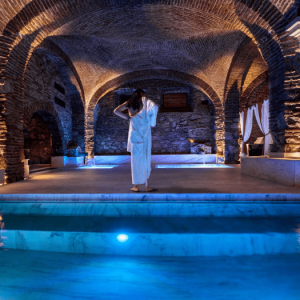


A spa is not defined solely by the treatments it offers. It is defined by how it makes those who enter feel.
The atmosphere as a starting point
Before the massage, before the bath, before the ritual, there is an atmosphere. And it's this atmosphere that transforms a simple visit into a memorable experience.
The right light changes the body's rhythm.
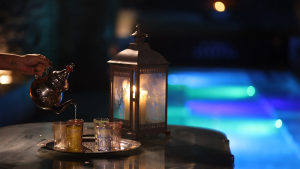
Light is one of the first elements to create this sensation. Soft, well-controlled lighting helps the body to perceive that it has entered a different rhythm. Excessive light awakens; the right light welcomes. In a spa, shadow also has value. It allows for rest, intimacy, and seclusion.
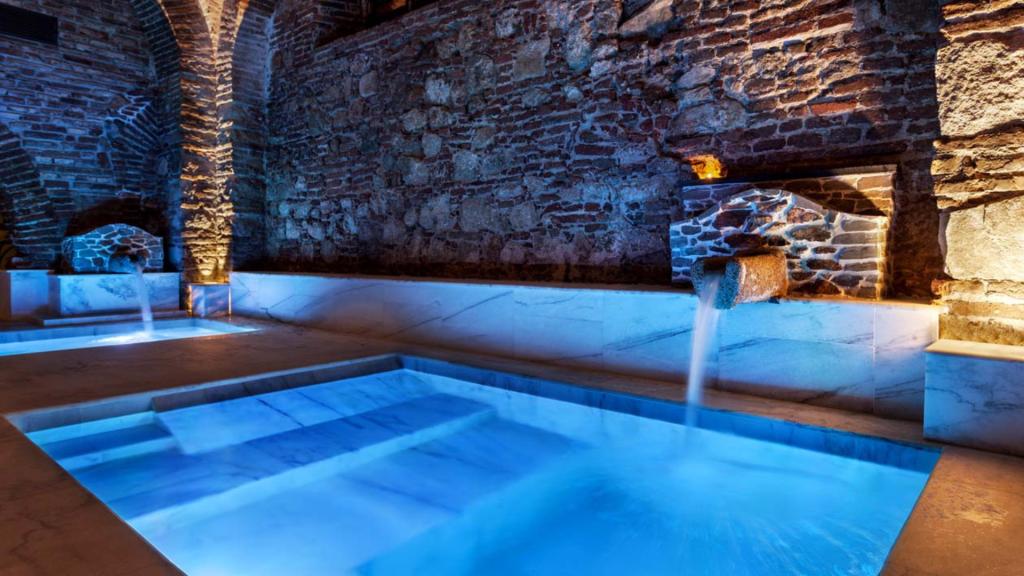
Stone as memory, matter, and presence
Stone adds presence and permanence. It evokes architecture, history, and matter. In a space inspired by Roman baths, stone helps to build a connection with the past, making the environment deeper and more authentic. It is not just decoration; it is language.
The steam and the ritual dimension of the spa
Steam introduces mystery. It blurs outlines, warms the body and invites slower breathing. There is something almost ritualistic about steam: it covers, envelops, slows things down. It makes us lose our exact sense of time and brings us closer to a more sensorial experience.
Silence as a form of essential luxury
Silence is perhaps the rarest element. In a noisy world, finding a space where silence is respected becomes a form of luxury. Not an ostentatious luxury, but an essential luxury: the simple ability to just be.
When water, light and silence create a complete experience
When these elements combine with water, a complete experience is born. The body feels the temperature, the skin feels the humidity, the eyes rest in the light, the ear settles in the silence, and the mind begins to free itself from its usual speed.
A good spa is a sensory composition
A good spa, therefore, is a composition. Much like a work of architecture or a well-constructed photograph, it depends on balance, intention, and atmosphere.
The details that transform well-being into memory
Light, stone, steam, and silence are not details. They are part of the relaxation. They are what transform well-being into memory.
At Acqua Veritas Spa in Évora
Experience inspired by ancient Roman baths
Discover a wellness ritual where water, heat, silence, and time come together for a memorable experience.
Frequently asked questions about the spa sensory experience
What makes a spa a sensory experience?
A spa becomes a sensory experience when it combines water, temperature, light, materials, steam, silence and atmosphere to create a complete feeling of relaxation and well-being.
The lighting is important in a spa because it contributes to the overall atmosphere, promotes relaxation, and can enhance the therapeutic benefits of treatments. Different types of lighting can be used to create specific moods, such as warm, soft lighting for a tranquil ambiance, or brighter, more focused lighting for treatments that require precision. Natural light can also be beneficial, creating a sense of openness and connection to the outdoors.
Light influences how the body perceives space. Soft lighting helps to create a sense of welcome, rest, intimacy and a transition to a more tranquil rhythm.
O vapor desempenha um papel crucial numa experiência de spa, pois ajuda a limpar, desintoxicar e relaxar o corpo. A humidade do vapor abre os poros, permitindo que a pele elimine toxinas e impurezas. O calor do vapor também aumenta a circulação sanguínea, promovendo a cicatrização e promovendo o relaxamento muscular.
Steam warms the body, softens the perception of space, and creates an enveloping atmosphere, helping to make the experience slower, ritualised, and sensory.
Because silence is valued in a spa?
Silence allows for mental rest and helps to block out the noise of routine. In a spa, silence is part of the experience and contributes to a deeper sense of pause.
Where to have a sensory spa experience in Évora?
At In Acqua Veritas Spa in Évora, water, light, stone, steam and silence create a wellness experience inspired by ancient Roman baths.
 Portuguese
  English
  Spanish
  French