
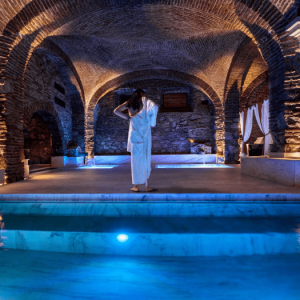


Searching for a massage in Évora can stem from very different needs. Some people seek to relieve tension, others want to relax deeply, some wish to complement a spa moment, or simply need to pause for a while.
Every body needs a different break
The right choice begins with this question: what are you looking for right now? Rest, warmth, touch, silence, lightness, depth, or a more complete experience?
A good massage should not be seen as an isolated treatment. It can be part of a wellness ritual, especially when combined with water, atmosphere, and time.
Therefore, before booking, it's worth listening to your body. There are days when you simply seek gentleness. On others, the body craves warmth, presence, and a deeper sense of release.
Massage and atmosphere: the importance of the ambience
Touch is essential, but the experience doesn't just begin on the massage table. It begins with the space. The light, the aroma, the temperature, the silence and how the body enters the environment all influence how you relax.
Therefore, choosing a massage at a spa can be different from choosing a purely technical service. At a spa, the massage integrates an atmosphere of respite. The body doesn't just receive pressure or movement; it receives context.
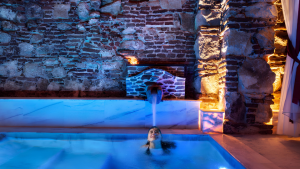
In the case of At Acqua Veritas Spa in Évora, inspiration in the roman baths adds water, warmth and a sensory dimension to the moment.
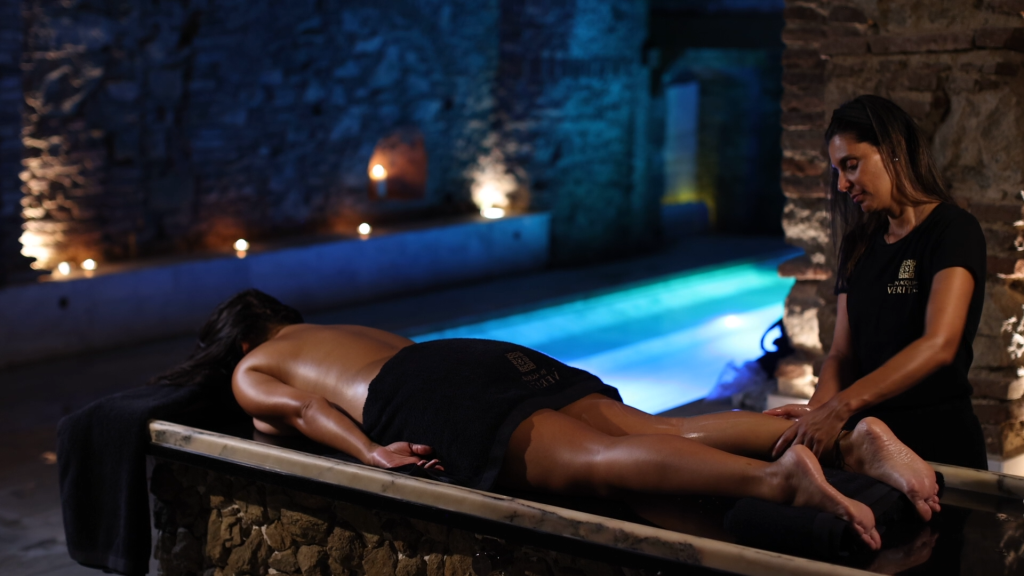
Relaxing massage, hot stones or body ritual?
A relaxing massage can be recommended for those seeking softness, rest, and deceleration. It's a good choice for those feeling accumulated tiredness, mild tension, or simply desiring a tranquil break.
A hot stone massage can be interesting for those who value warmth and a deeper sense of comfort. The heat helps the body to surrender more easily, creating an enveloping and comforting experience.
A bodily ritual can create a more complete experience, engaging texture, aroma, and care. In this instance, massage ceases to be merely a moment of relaxation and becomes integrated into a broader sense of well-being.
The best choice depends on the state of the body and the intention of the visit. The longest experience isn't always the most suitable. Sometimes, the essential thing is to choose the one that best suits the moment.
Combining massage with Roman baths
One of the most complete ways to experience a massage is to combine it with a water experience. Roman baths help the body get into another rhythm before or after the treatment.
Hot water, steam and silence prepare the mind to receive the massage better. The body progressively lets go of external tension and finds a calmer disposition for touch.
The result is a more immersive sense of relaxation. The massage doesn't happen in isolation; it's part of a journey where water, heat, atmosphere, and time come together to create a more memorable experience.
Massages in Évora for visitors, residents, and special occasions
A massage in Évora could be a good choice for those living in the city and looking for a nearby break, but also for visitors who want to complement their itinerary with a wellness experience.
After a walk through the historic centre, visiting monuments or enjoying a getaway in Alentejo, a massage can help your body regain a sense of lightness. It can also be an excellent suggestion for couples, gifts, or special celebrations.
If the intention is to offer an experience rather than an object, a Spa Gift Card You can turn massage into a gift of time, care, and presence.
Book a massage in Évora
A good massage is more than a break for the body. It's a break from the rush.
At In Acqua Veritas Spa in Évora, every experience is designed to create that moment: water, silence, ambiance and care brought together for a wellness break.
Meet the Massage and wellness experiences No, at Acqua Veritas Spa in Évora.
At Acqua Veritas Spa in Évora
Experience inspired by ancient Roman baths
Discover a wellness ritual where water, heat, silence, and time come together for a memorable experience.
Frequently asked questions about massage in Évora
How to choose a massage in Évora?
To choose a massage in Évora, start by understanding what your body is looking for: relaxation, tension relief, heat, gentleness, depth, or a more complete spa experience.
The difference between a relaxing massage and a hot stone massage lies in the technique and the use of heated stones. A **relaxing massage** generally focuses on applying gentle to moderate pressure to the muscles to ease tension, promote relaxation, and improve circulation. The therapist uses their hands, thumbs, palms, and sometimes forearms to perform strokes like effleurage, petrissage, and friction. The goal is to create a calming experience and relieve stress. A **hot stone massage** incorporates smooth, heated stones, typically basalt stones, into the massage. These stones are placed on specific points of the body (like along the spine, in the palms of the hands, or between the toes) and also used by the therapist to massage the muscles. The heat from the stones penetrates deep into the muscles, which can help to relax them more effectively and relieve deeper tension than a standard massage alone. The heat also enhances the overall sense of relaxation and can be particularly beneficial for those who feel cold or have stiff muscles.
Relaxing massage is recommended for those looking for gentleness, rest, and a slowing down. Hot stone massage makes the most of heat and can create a deeper feeling of comfort and relaxation.
Can a massage be combined with Roman baths?
Yes. Combining massage with Roman baths can make the experience more complete, as the hot water, steam, and silence help the body to enter a more tranquil rhythm.
Is a spa massage different from a standalone massage?
Yes.
Onde fazer uma massagem em Évora?
At In Acqua Veritas Spa in Évora, you can experience massages and wellness in an environment inspired by ancient Roman baths, with water, silence, and care.
 Portuguese
  English
  Spanish
  French